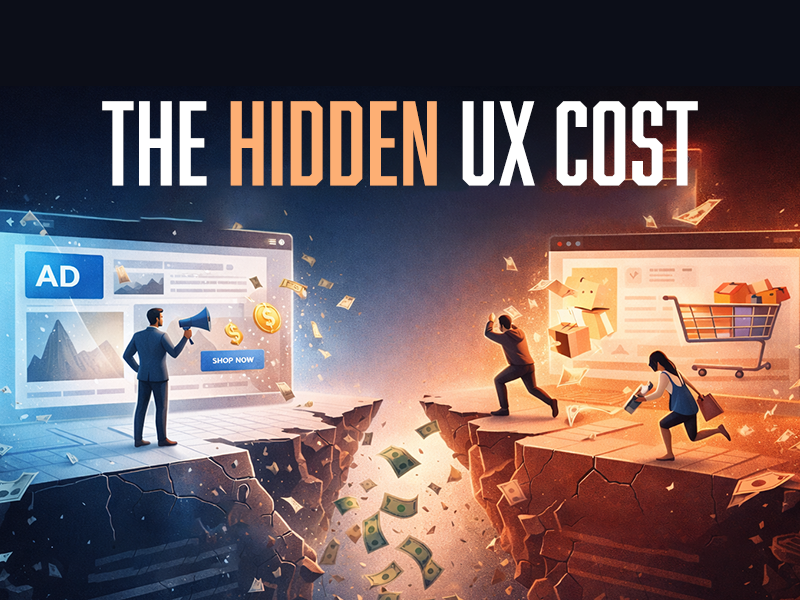
Paid campaigns don’t usually fail loudly. They fail quietly.
Clicks keep coming in, ad dashboards look active, and traffic numbers stay steady. But somewhere between the ad click and the final action, value starts leaking. Over time, this turns into rising costs, falling returns, and endless ad tweaks that don’t fix the real problem.
More often than not, the issue isn’t targeting or budget. It’s user experience.
This is why businesses working with a UX design agency in Kolkata eventually realize that UX plays a much bigger role in paid success than they initially assumed.
Paid Traffic Has Zero Patience
Unlike organic visitors, users coming from ads arrive with a clear purpose— and very little tolerance for confusion.
If your landing page UX doesn’t immediately validate their decision to click, hesitation kicks in. Pages that feel slow, cluttered, or unclear create friction that users won’t wait to overcome.
This is one of the most common issues affecting conversions, especially in high-intent paid campaigns.
The Subtle UX Problems That Hurt ROI
Most usability problems don’t look dramatic on their own. But stacked together, they quietly damage performance.
Some of the most common culprits include:
- Headlines that don’t reinforce the ad promise
- CTAs that blend into the page instead of standing out
- Forms that ask for too much, too early
- Layouts that look good but don’t guide action
Each of these contributes to the poor impact on ROI, even when ads are well-optimized.
Why Paid Campaigns Feel the Pain First
Paid traffic amplifies problems faster than any other channel.
When UX isn’t designed for intent-driven users, even small issues lead to loss of campaign ROI like higher bounce rates, lower engagement, and poor conversion quality.
That’s why UX optimization for paid traffic requires a different mindset, one that prioritizes clarity, speed, and decisiveness over visual novelty.
Conversion Doesn’t Happen by Accident
High-performing landing pages don’t rely on persuasion alone. They rely on structure.
A strong conversion-focused UX design makes the next step obvious at every point. It removes doubt, answers questions proactively, and reduces cognitive load.
This is where user optimization services come into play; mapping how users move from click to conversion and fixing drop-offs along the way.
Friction Is the Silent Revenue Killer
Users rarely abandon pages because of one big issue. They leave because of accumulated friction.
A slow-loading section here. A confusing scroll there. An unclear CTA placement. Over time, these moments add up.
Through friction points analysis, teams can identify where hesitation starts and why users disengage, even when interest is high.
This kind of insight fuels smarter website optimization, not surface-level design changes.
Why Design-Led CRO Works Better Than Isolated Fixes
Tweaking ads without fixing UX is like pouring water into a leaking bucket.
A design-led CRO strategy aligns layout, content, interaction, and intent, so optimization happens across the entire experience, not just at the CTA.
This approach is especially important for brands trying to scale paid campaigns sustainably, without constantly increasing budgets to compensate for UX gaps.
When to Consider a UX Audit
If paid traffic is strong but conversions aren’t improving, it’s often time to employ auditing services.
A proper audit evaluates:
- Message match between ads and pages
- Interaction clarity
- Mobile usability
- Conversion path efficiency
These audits form the foundation of a long-term improvement framework, helping businesses prioritize fixes that actually move ROI.
UX, Creativity, and Performance Must Work Together
UX doesn’t live in isolation. It sits at the intersection of design, messaging, and performance data.
That’s why many brands choose to work with a performance consultancy or integrated teams that understand both creativity and conversion behavior.
Through its creative services, The QA helps brands design user experiences that don’t just look polished— but actively support paid performance, conversion goals, and long-term growth.
Paid ads don’t fail because users aren’t interested. They fail when the experience doesn’t respect that interest.
If ROI is slipping despite strong traffic, it’s time to stop tweaking ads in isolation and start fixing the experience they lead to.
Because the fastest way to improve paid performance isn’t always in the ad account. It’s in the UX after the click.