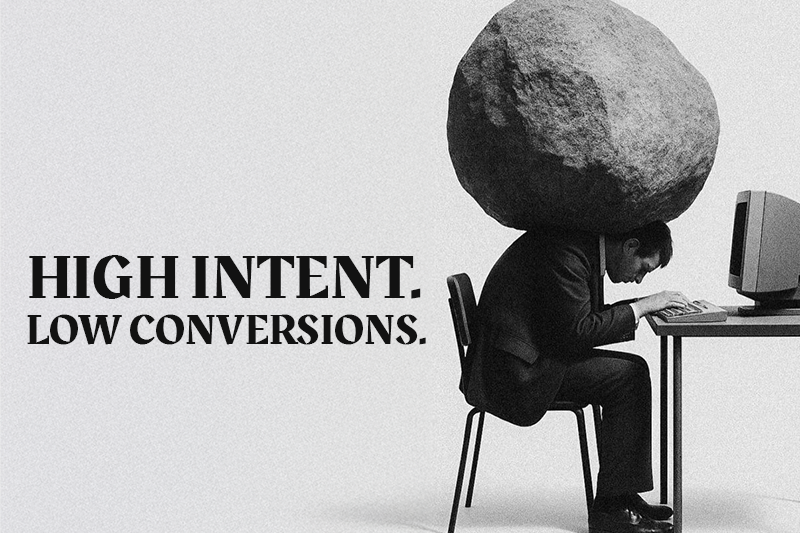
You open your reports and feel cautiously optimistic. The keywords look solid. The search terms clearly signal intent. These are users who want what you’re offering. And yet, conversions don’t follow.
This is where many paid campaigns quietly lose momentum. Brands invest heavily in traffic optimization, assuming intent alone will carry the results. But intent doesn’t convert on its own. Experience does. And when that experience is even slightly misaligned, high-intent users leave faster than low-intent ones.
At The QA, a performance marketing agency in Kolkata, we see this exact pattern across industries. The traffic isn’t the problem. What happens after the click usually is.
Start With This Question: What Did the User Expect to See?
Every click carries a promise. The ad sets an expectation, and the landing page either fulfils it; or breaks trust immediately.
This is why conversion issues are so common. The user arrives ready to act, but something feels off. Often, it’s a classic user intent vs landing page mismatch.
Common red flags include:
- The ad highlights urgency, but the page feels generic
- The keyword suggests comparison, but the page pushes a hard sell
- The user expects clarity, but the page leads with brand messaging
Strong landing page optimization focuses on fixing exactly this gap, making sure the first few seconds reassure the user they’re in the right place.
Is Your “High-Intent” Traffic Actually High-Intent?
Another uncomfortable but important reality: not all traffic labelled “high-intent” truly is.
Through detailed traffic quality analysis, we often find that certain keywords attract mixed motivations. Some users are ready to buy. Others are still researching or comparing options. Treating them the same leads to recurring conversion issues.
A structured traffic audit helps answer questions like:
- Are these users ready to convert right now?
- Do different intent levels need different landing experiences?
- Are we sending early-stage users to late-stage pages?
Without this clarity, conversion rates remain unpredictable.
Where Conversions Quietly Start Dropping
Conversions rarely fail all at once. They leak.
A proper conversion drop analysis usually reveals friction spread across the journey, such as:
- Slow page load times
- Overly complex forms
- Missing trust signals
- Poor mobile usability
High-intent traffic exposes these weaknesses faster than any other channel. This is why working with a well-established funnel optimization company becomes critical as campaigns scale.
Why Campaigns Look Healthy but Still Underperform
One of the most misleading situations in paid media is when surface metrics look fine.
Click-through rates are strong. CPC is controlled. Yet growth stalls. These are classic performance gaps— where optimization stops at the ad level.
True conversion improvement happens when ads, landing pages, and decision paths work as one system, not separate pieces.
Aligning Intent Across the Funnel
Fixing low conversions starts with a clear intent alignment strategy. That means understanding why the user clicked; and designing the experience around that motivation.
When done well, brands see consistent gains through a structured framework, rather than endless testing cycles with no direction.
As a well-established performance marketing consultancy in Kolkata, we, The QA, focus on closing this gap between acquisition and outcomes, so traffic doesn’t just arrive, but actually converts.
Why Improving Conversions Beats Buying More Traffic
A common reaction to low conversions is increasing spend. But more traffic only magnifies existing issues.
Often, fixing alignment delivers faster and more sustainable results than scaling budgets. This is where performance truly improves.
If you’re trying to understand why high-intent traffic isn’t converting; and what to fix first; you can explore our performance marketing services.
High-intent traffic doesn’t fail because users aren’t interested. It fails when intent isn’t respected.
Conversions happen when expectations are met quickly, clearly, and confidently. When alignment exists, traffic stops being a cost; and starts becoming growth.