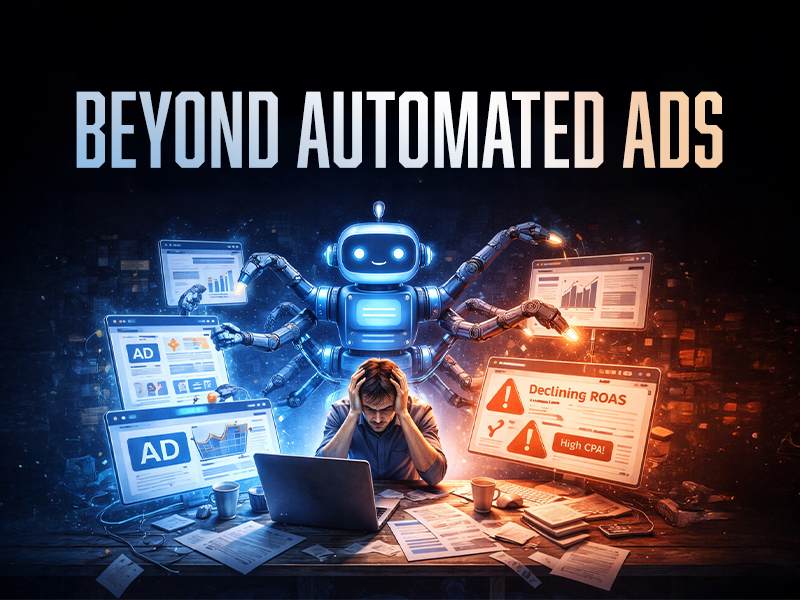
Automation has become the default setting in paid advertising. Smart bidding, AI-powered targeting, auto-generated creatives— by 2026, most ad platforms actively encourage advertisers to “let the system decide.” And on the surface, it sounds logical. Machines process data faster than humans. Algorithms don’t get tired. Decisions happen in real time.
So why do so many automated campaigns still struggle?
Because automation can execute, but it can’t think.
This is something brands often realize after working with a digital marketing consultancy: automation is powerful, but only when it’s guided by strong strategy. Without that, it quietly amplifies mistakes instead of fixing them.
Let’s unpack why automation alone won’t save paid campaigns, and what actually will work in 2026 instead.
The Promise; and the Limits; of Automation
There’s no denying the role of AI in advertising in 2026. Automated bidding, dynamic creatives, predictive targeting; all of these can improve efficiency when set up correctly. But automation works within the boundaries you give it.
This is where marketing automation limitations become visible.
Automation can:
- Optimize for the goal you select
- Scale what’s already working
- React to historical data
But it can’t:
- Question whether the goal itself is right
- Understand shifting user intent
- Fix weak positioning or messaging
- Replace strategic judgment
When advertisers rely too heavily on automation, automation dependency risks start to show— rising CPAs, unstable performance, and campaigns that look “optimized” but don’t actually drive business outcomes.
Where Automated Bidding Often Goes Wrong
Smart bidding is often the first place advertisers hand over control. While it can be effective, bidding pitfalls are common; especially when campaigns lack clean data or clear intent signals.
Some frequent bidding optimization issues include:
- Optimising for low-quality conversions
- Scaling spend before enough data exists
- Treating all conversions as equal
- Reacting too aggressively to short-term fluctuations
Automation doesn’t understand context. If your conversion tracking is weak, or your funnel leaks quality, automated bidding simply learns the wrong lessons, faster.
This is why human-led performance marketing still matters. Humans decide what should be optimised. Automation only decides how.
Automation vs Strategy: The Real Trade-Off
The biggest misconception is that automation replaces strategy. In reality, it exposes the absence of one.
The debate around automation vs strategy in ads isn’t about choosing sides. It’s about understanding roles. Automation executes decisions at scale. Strategy defines direction.
Without a clear decision-making framework, automation starts making decisions in isolation, based on incomplete signals. That’s when campaigns drift away from business goals while still appearing “efficient” inside dashboards.
Good strategy answers questions automation never will:
- Who should we not target?
- Which conversions actually drive revenue?
- When should we hold spend instead of scaling?
What messaging resonates at different funnel stages?
Why Creative Is Where Automation Breaks First
Automation struggles most where nuance matters— and that’s creative.
AI can test variations, resize assets, and rotate formats. But it can’t deeply understand brand voice, emotional triggers, or cultural context. This is where many AI-driven ads optimization setups fall short.
In 2026, performance isn’t just about targeting the right user. It’s about saying the right thing at the right moment. Creative strategy, messaging hierarchy, and storytelling still require human insight.
This is why many performance-led teams collaborate closely with creative specialists. Platforms can optimize delivery, but meaning still comes from people. If you’re exploring how creative thinking supports paid performance, it’s worth checking out The QA’s creative services, where strategy and execution are designed to work together rather than in silos.
The Risk of Letting Automation Scale Too Early
Automation loves scale. But scaling without understanding is risky.
One of the biggest automation dependency risks is premature scaling; when budgets increase before conversion quality, funnel alignment, or messaging are validated. Automation doesn’t know when to pause. Humans do.
This is where media strategy consulting becomes essential. Strategic oversight helps teams decide:
- When automation should lead
- When manual control is needed
- When data is misleading
- When performance signals need interpretation
Automation accelerates outcomes, but it doesn’t judge whether those outcomes are good or bad for the business.
The Hybrid Approach That Actually Works
The future isn’t manual vs automated. It’s hybrid.
A hybrid automation marketing approach blends machine efficiency with human judgment. Automation handles scale, testing, and speed. Humans handle direction, quality control, and long-term growth decisions.
In this model:
- Automation executes clearly defined goals
- Humans define conversion quality metrics
- Strategy evolves alongside data, not behind it
- Creative, funnel, and media decisions stay aligned
This balance is what separates stable performance from volatile performance; especially in competitive markets.
What This Means for Performance Marketing in India
As platforms become more automated, the role of strategy becomes more valuable; not less. This shift is shaping the performance marketing sphere that India is moving toward: fewer button-pushers, more decision-makers.
Brands increasingly look for partners who understand systems, not just tools. Teams that can interpret data, guide automation, and align performance with real business growth.
That’s where experienced consultative partners; like The QA; add value beyond platform defaults.
Automation Is a Tool, Not a Safety Net
Automation is here to stay. But it’s not a shortcut to results.
In 2026, paid campaigns don’t fail because automation is weak. They fail because strategy is missing, creative is underdeveloped, or decisions are handed over too early.
Automation can make good campaigns great, but it will never rescue poor ones.
The real advantage lies in knowing when to trust the machine, and when to step in and steer.